Ódàbo
(Until I See You Again)
Interactive Sculpture, Laser Cutting, Design
Tools
Ardunio, Adobe Illustrator, C++
Materials & Dimensions:
Handcrafted wood, natural indigo dye, acrylic, electronics and sound 
45" × 20" × 10"
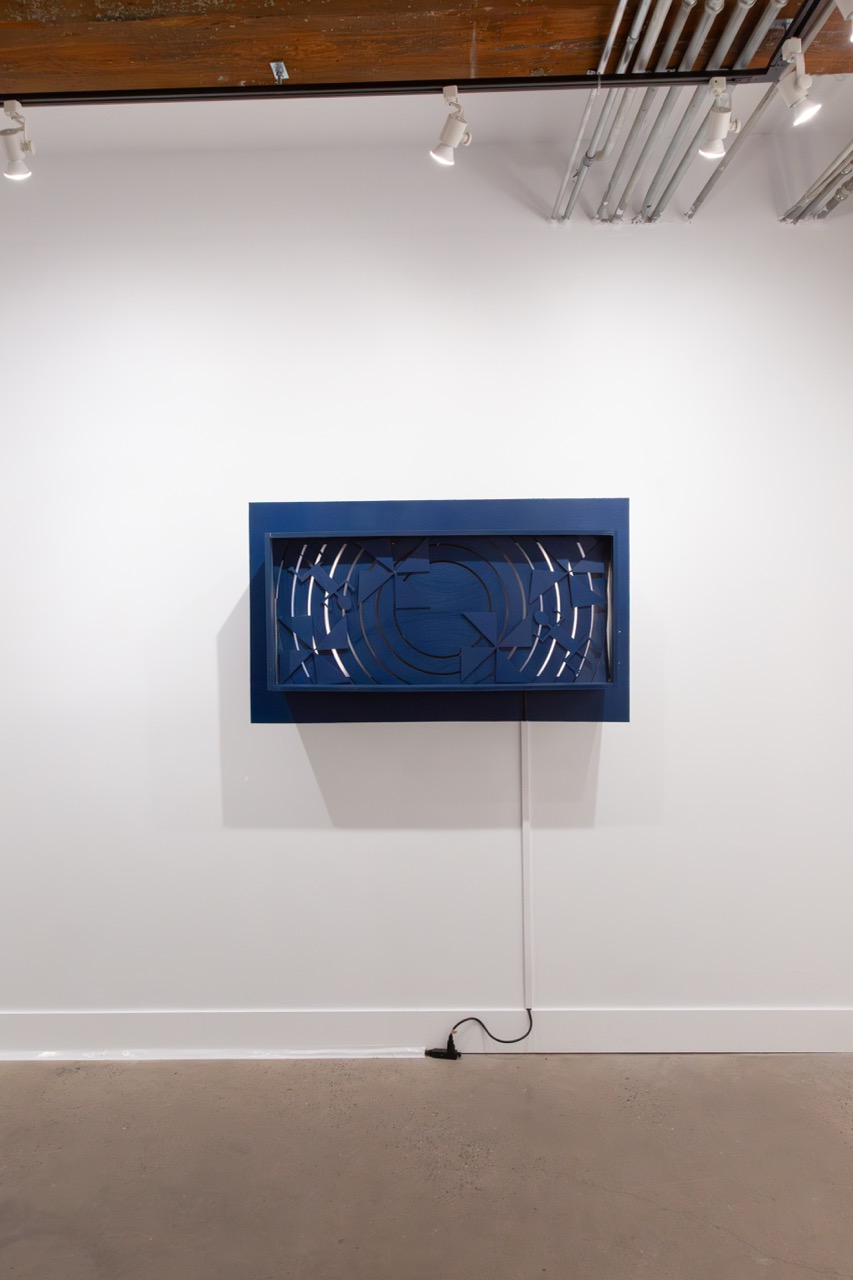
Ódàbọ̀ means “until I see you again” in Yoruba, a word that carries faith in reunion, a faith in home for all of those who seek it.
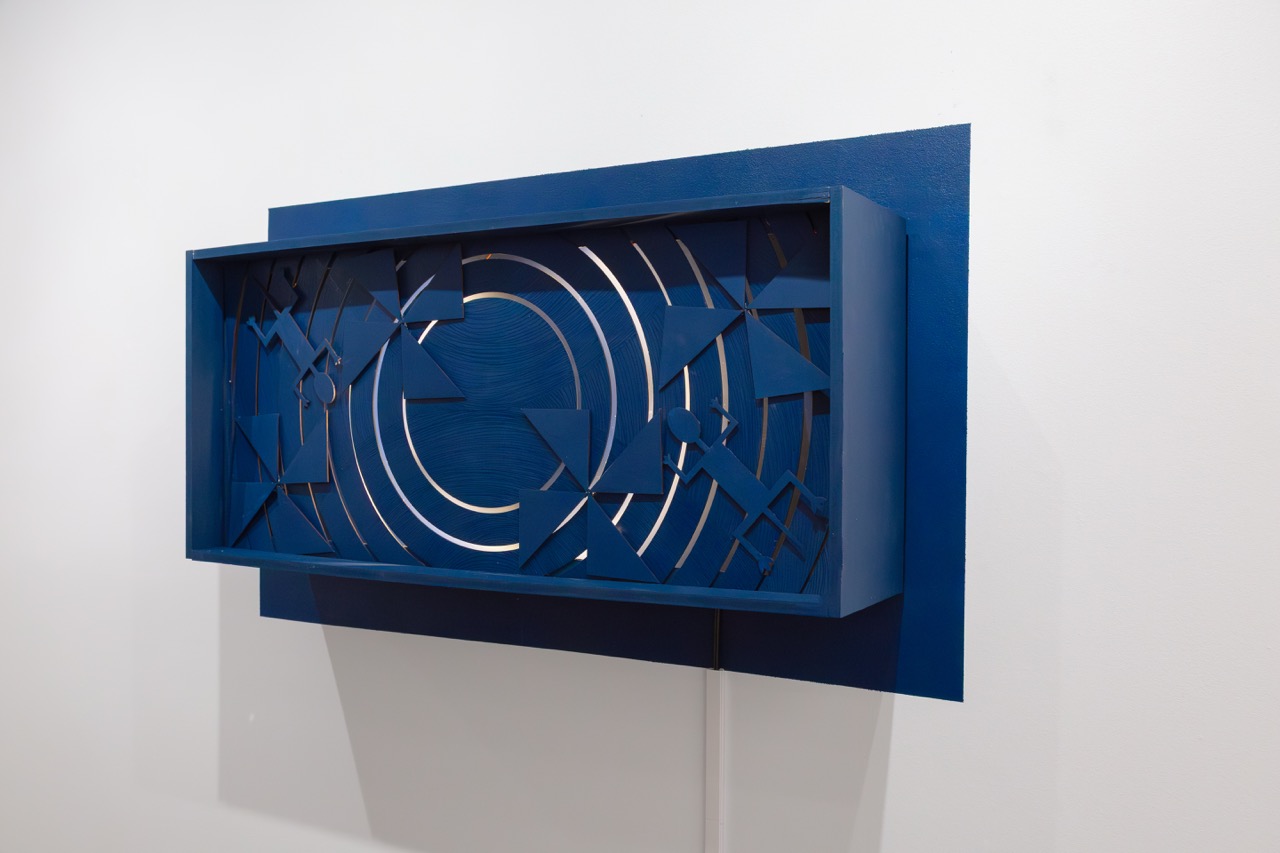
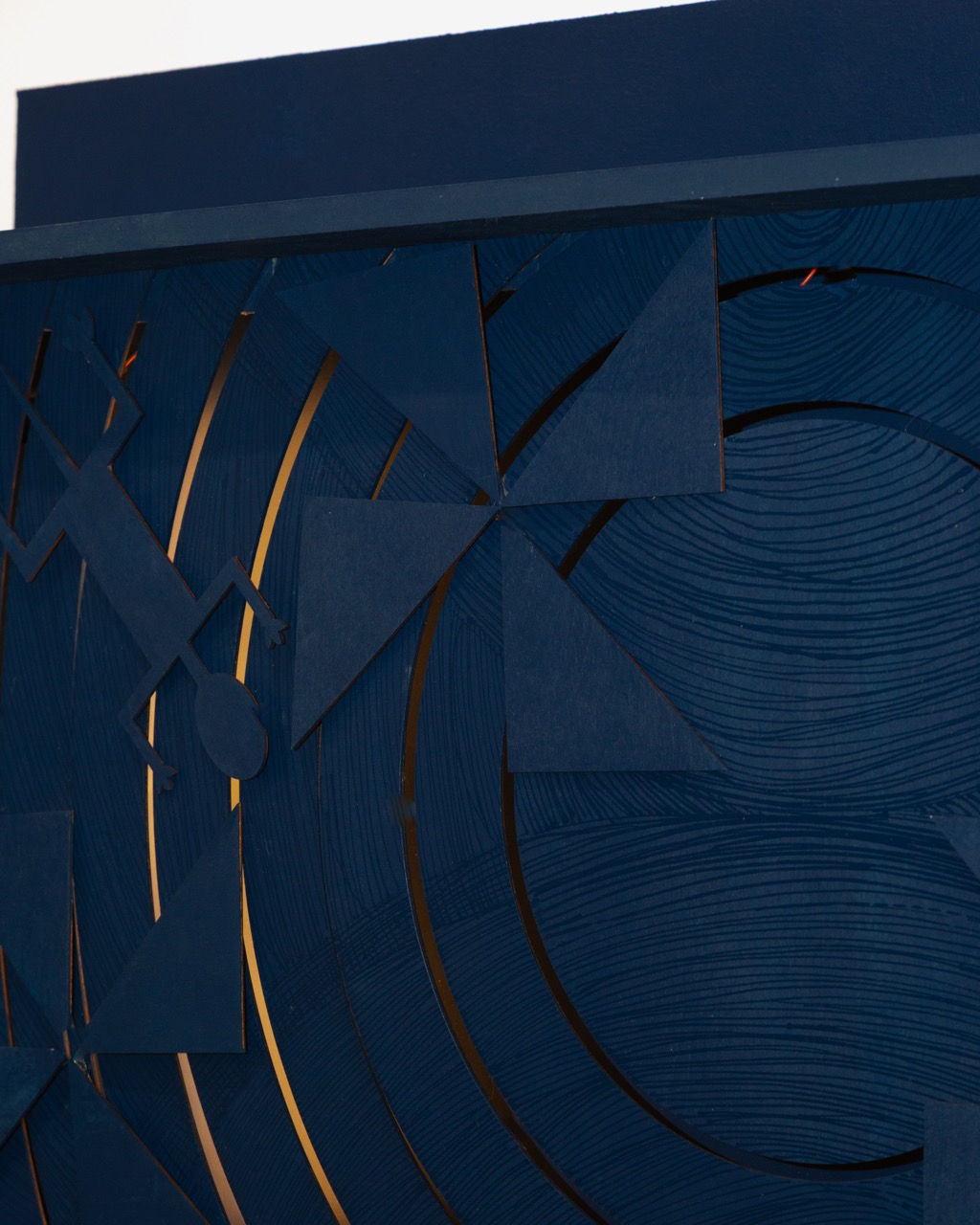
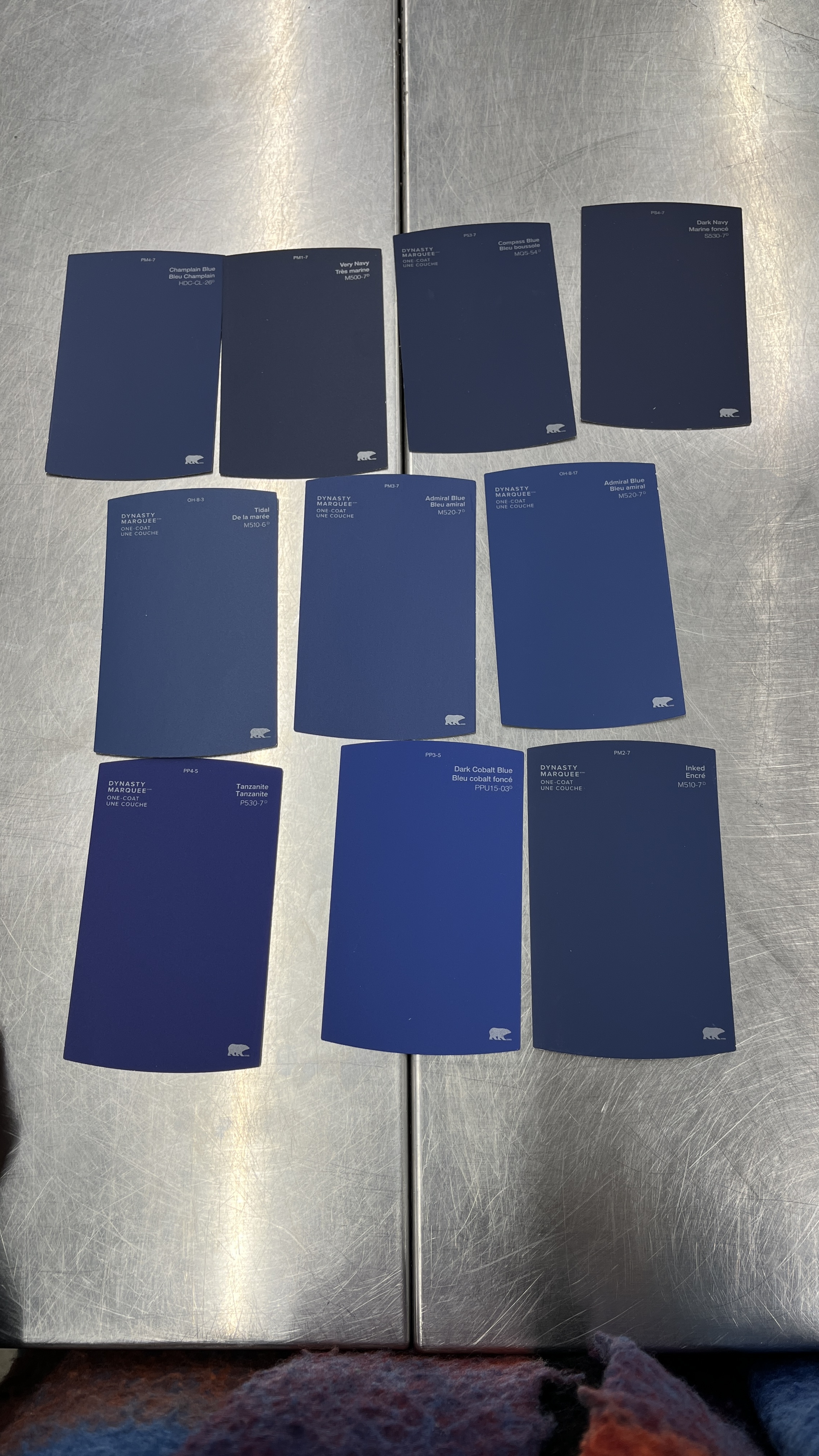
Layered panels of dyed indigo wood and acrylic recall adire cloth; indigo becomes sky, serenity, cultural memory.
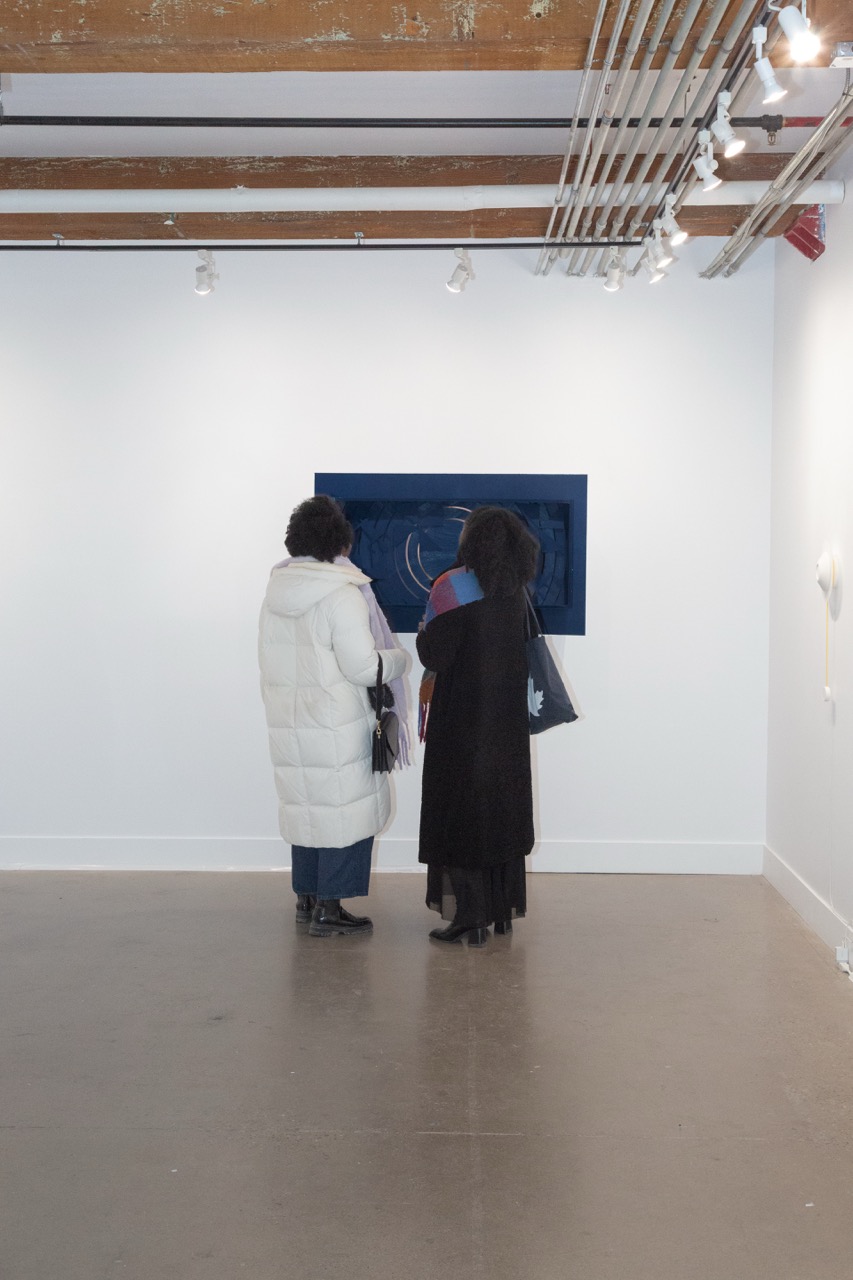
Behind them, a warm orange light glows like the sun that follows me from home. Motion sensors awaken the light as you approach, while touch alone coaxes sound: field recordings from Nigeria, lullabies, morning birds, quiet textures of home.
Appreciation to Adam Ashley for the care that helped bring this piece into being. Please approach. Touch. Listen. Hold the promise within.

Concept

This piece sits with the quiet ache of being separated from a home and a heritage sometimes from a heritage we haven't even directly lived. Waiting out Canadian winters and counting down to a returnhome to Nigeria, I kept arriving at the same realization: that my ability to go back at all is a privilege. So much work made in the diaspora centers on longing for a culture, and for many people that longing is compounded by social and political conditions that make return impossible. The work tries to hold space for that, for the people who carry home in their bodies but cannot set foot in it with the promise that one day.

Hardware

Structure + Fabrication
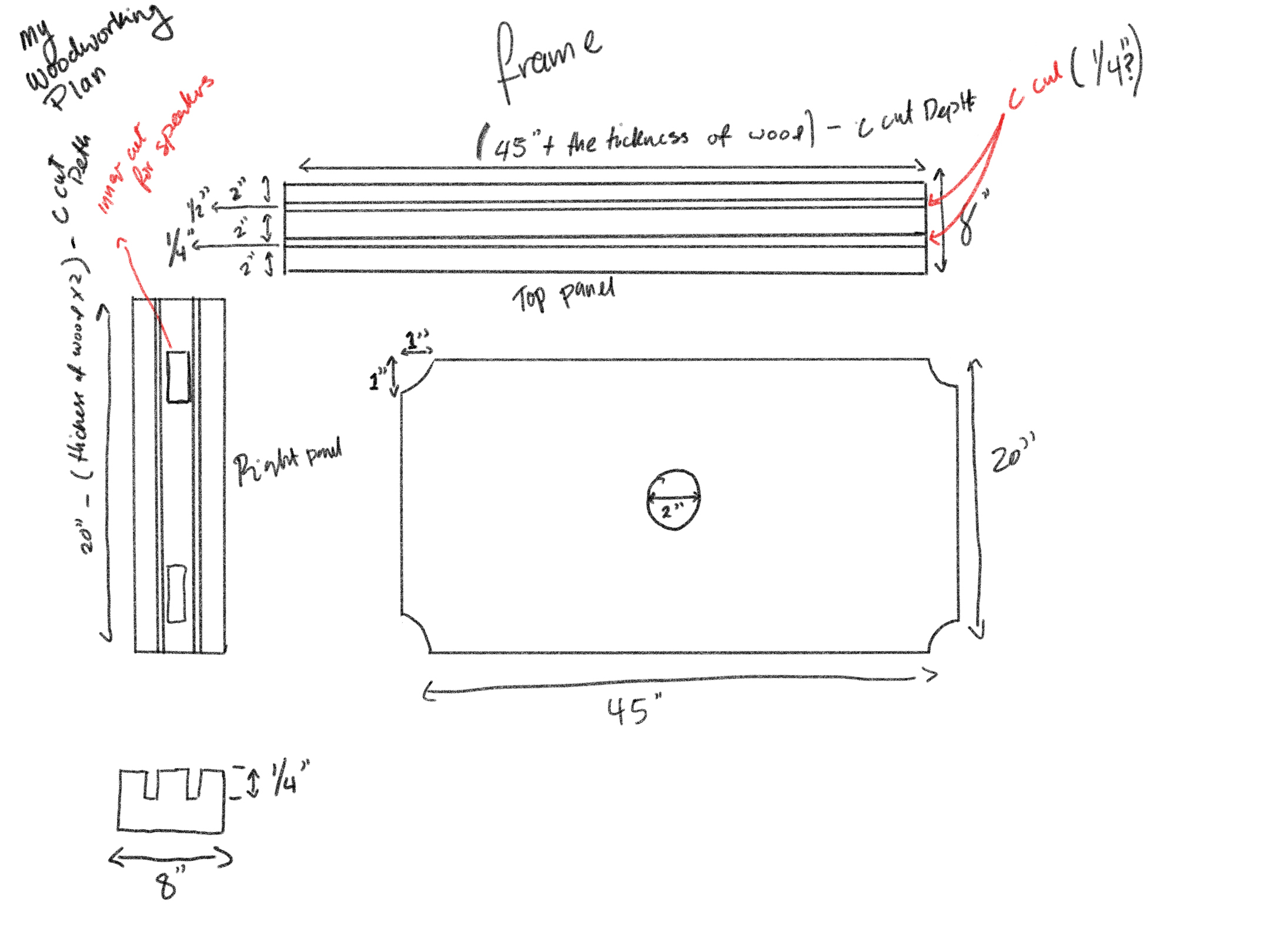
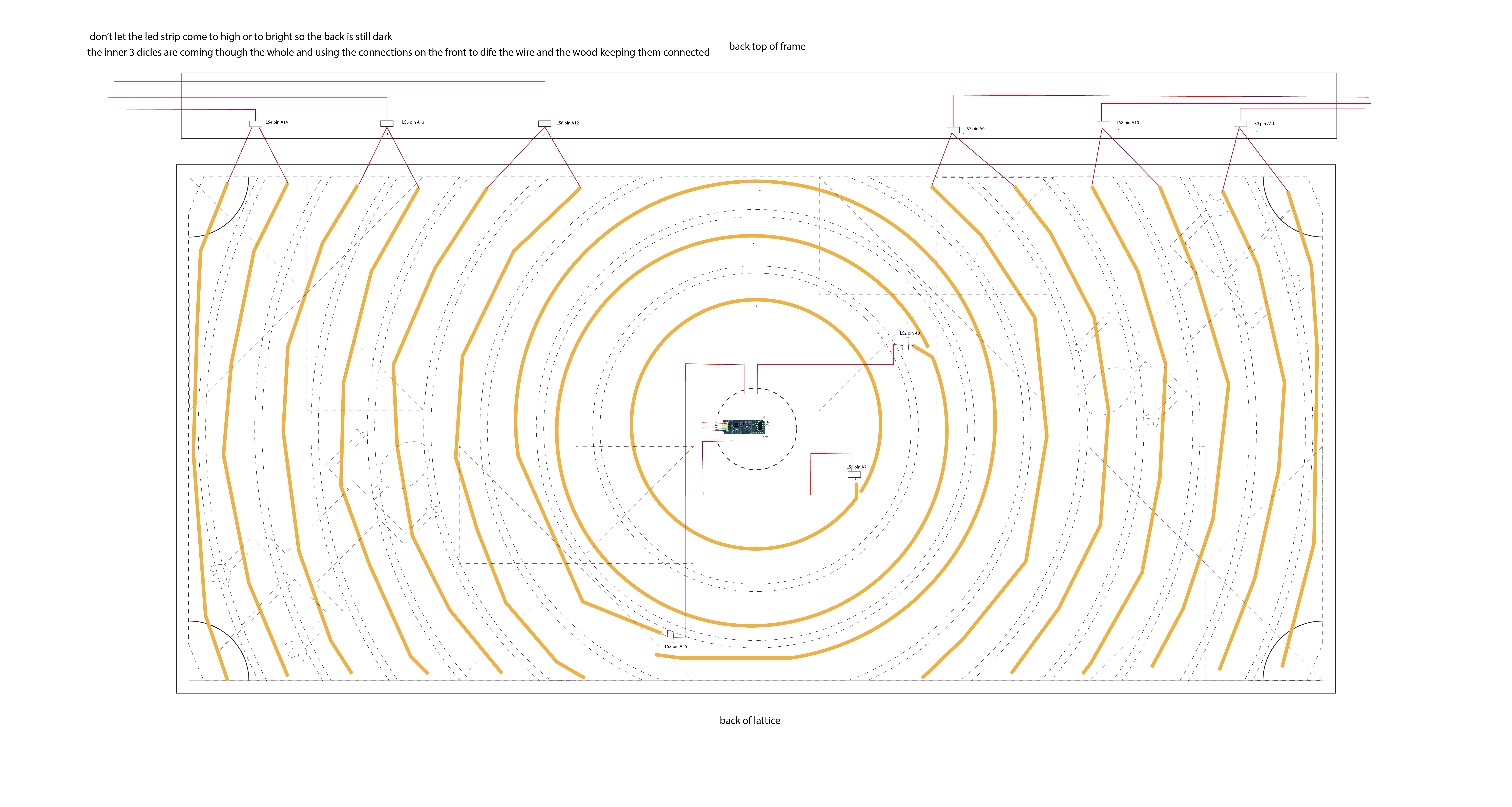
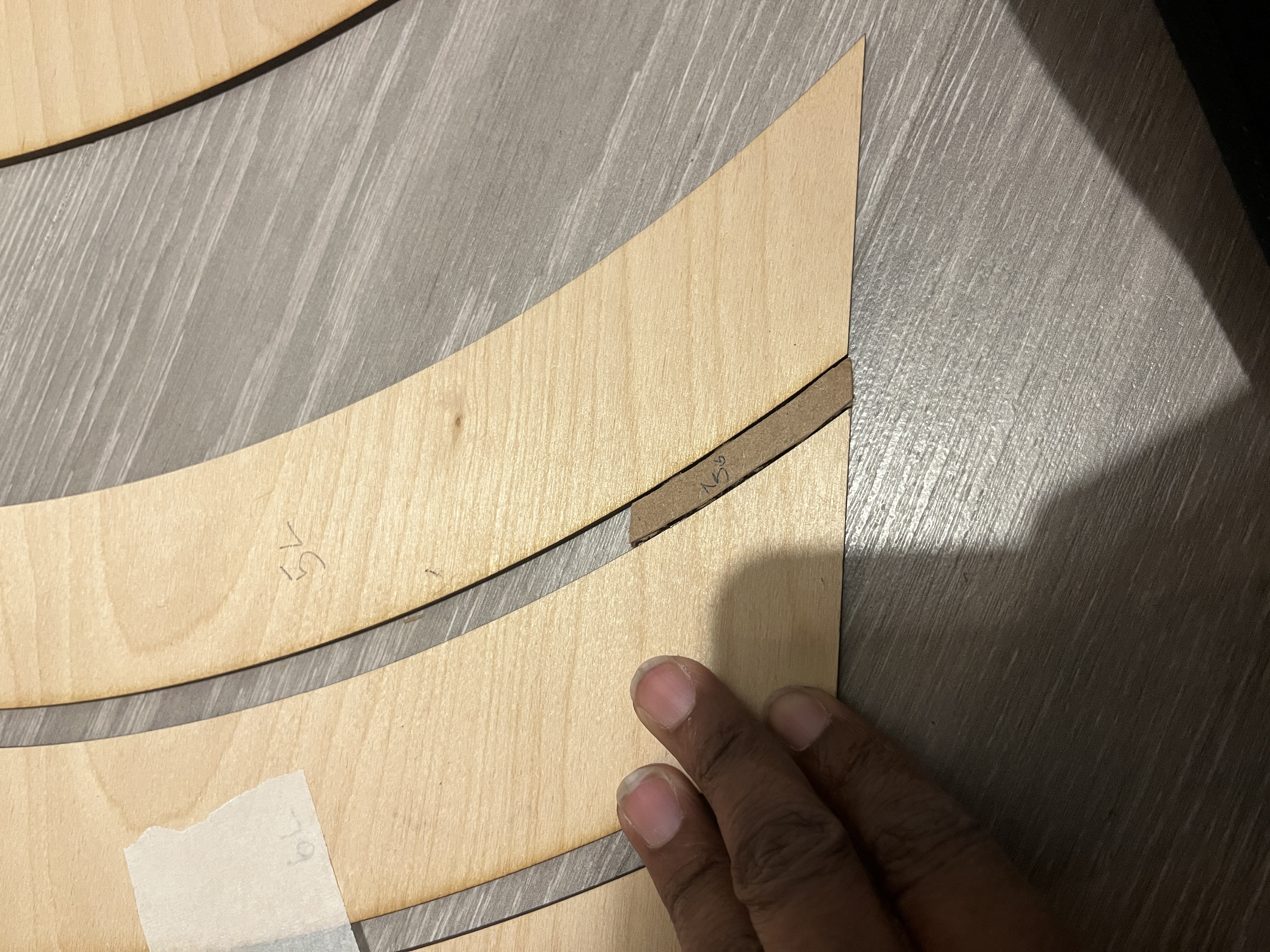
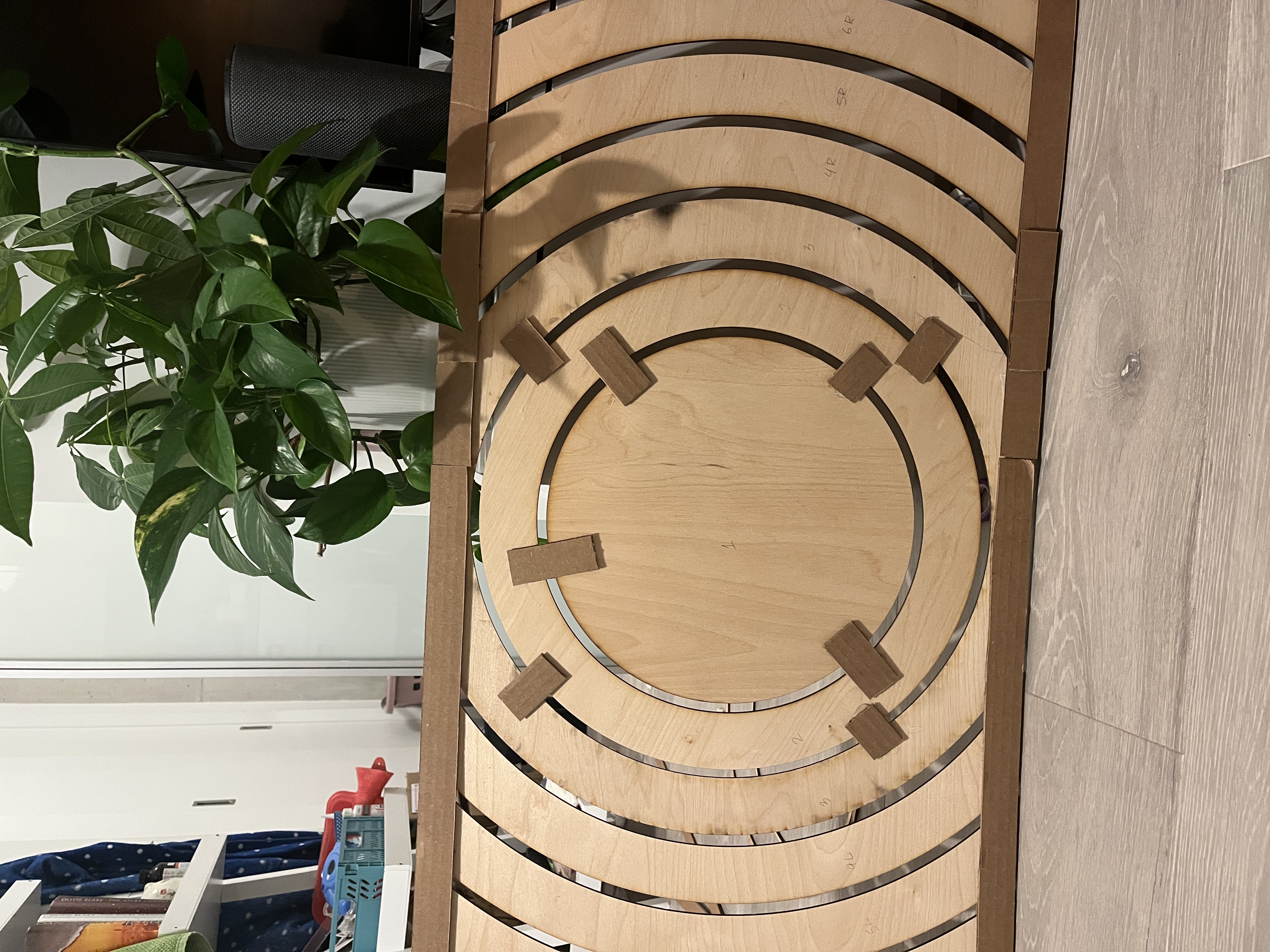
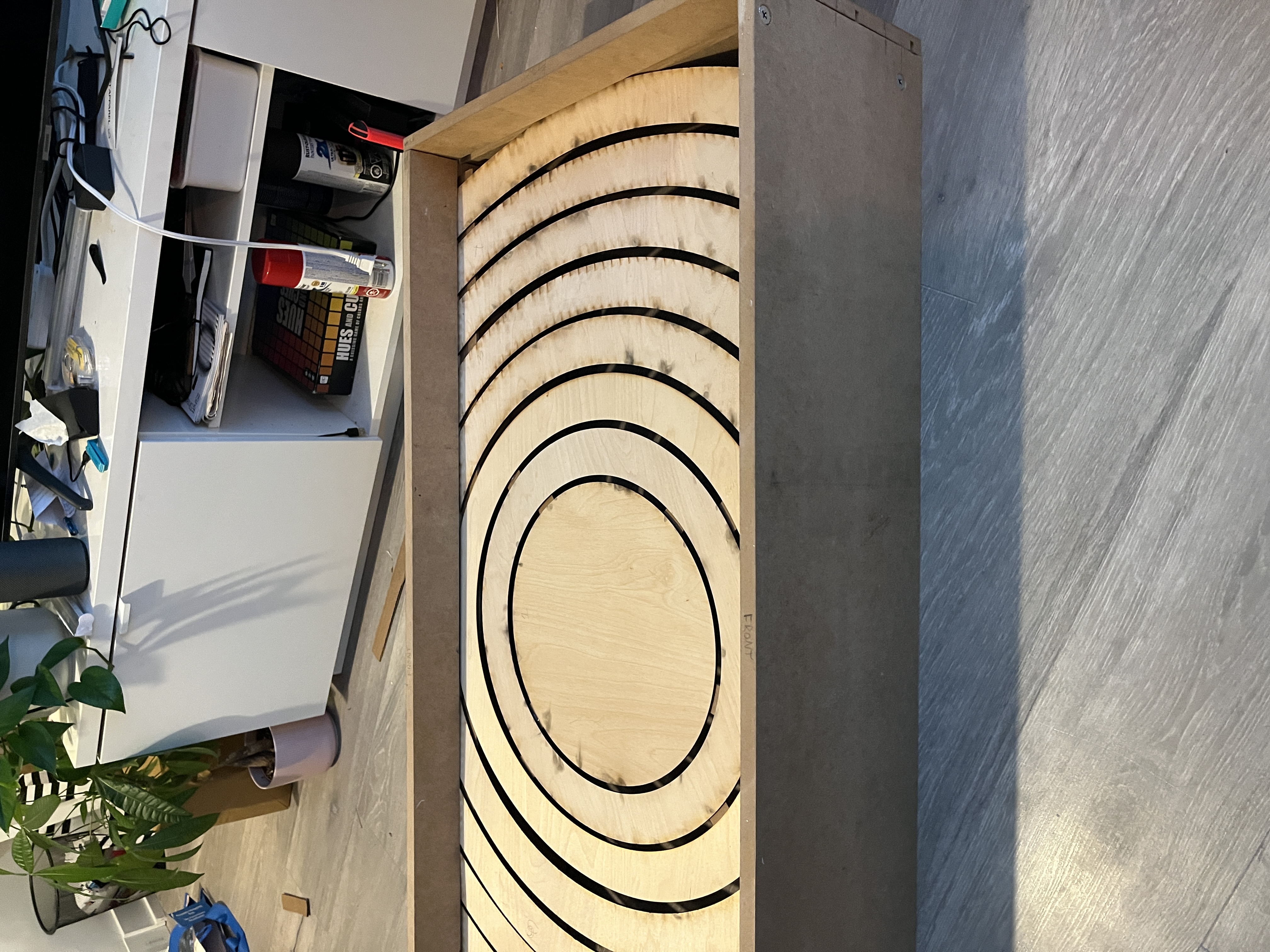
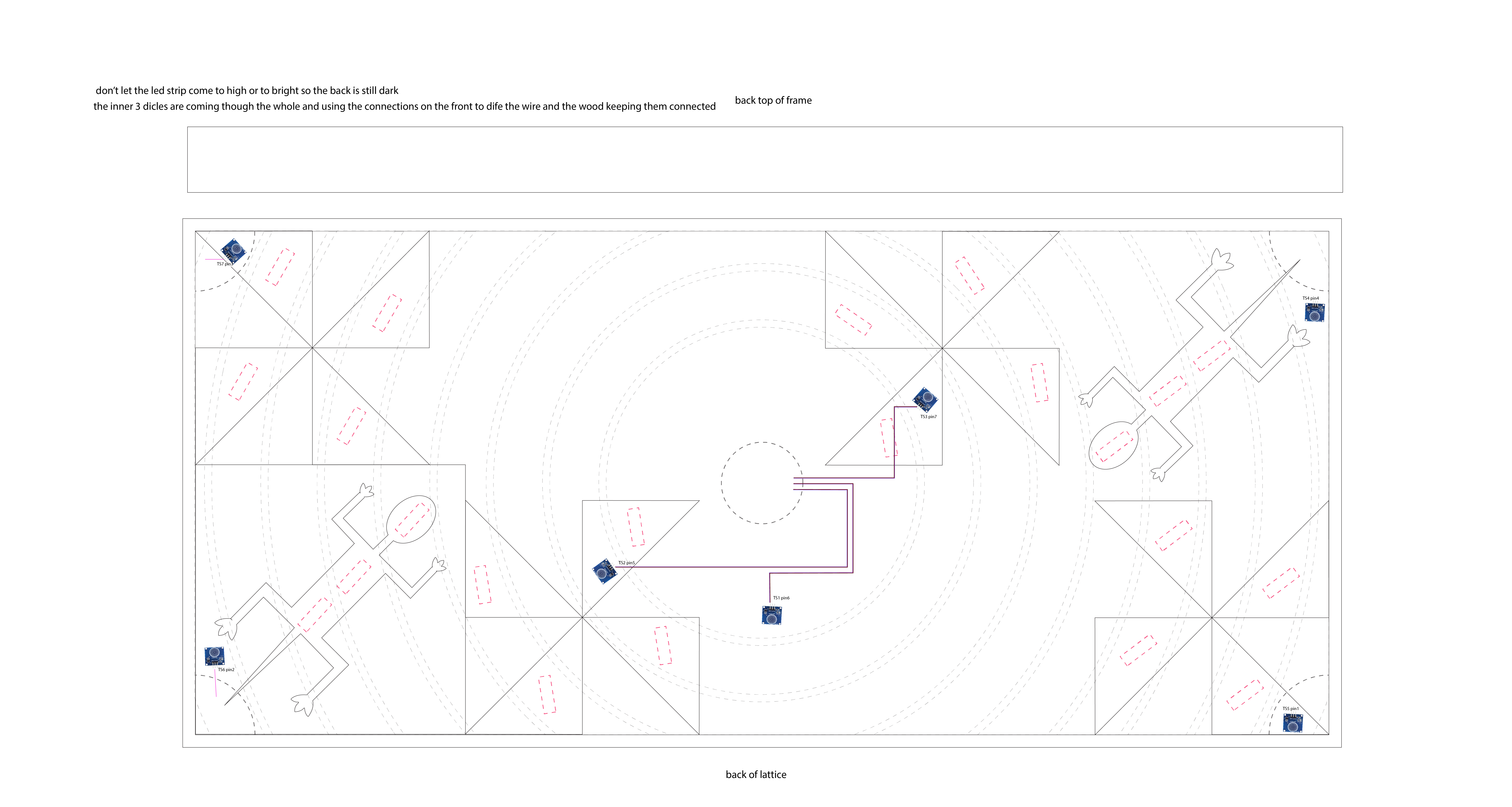
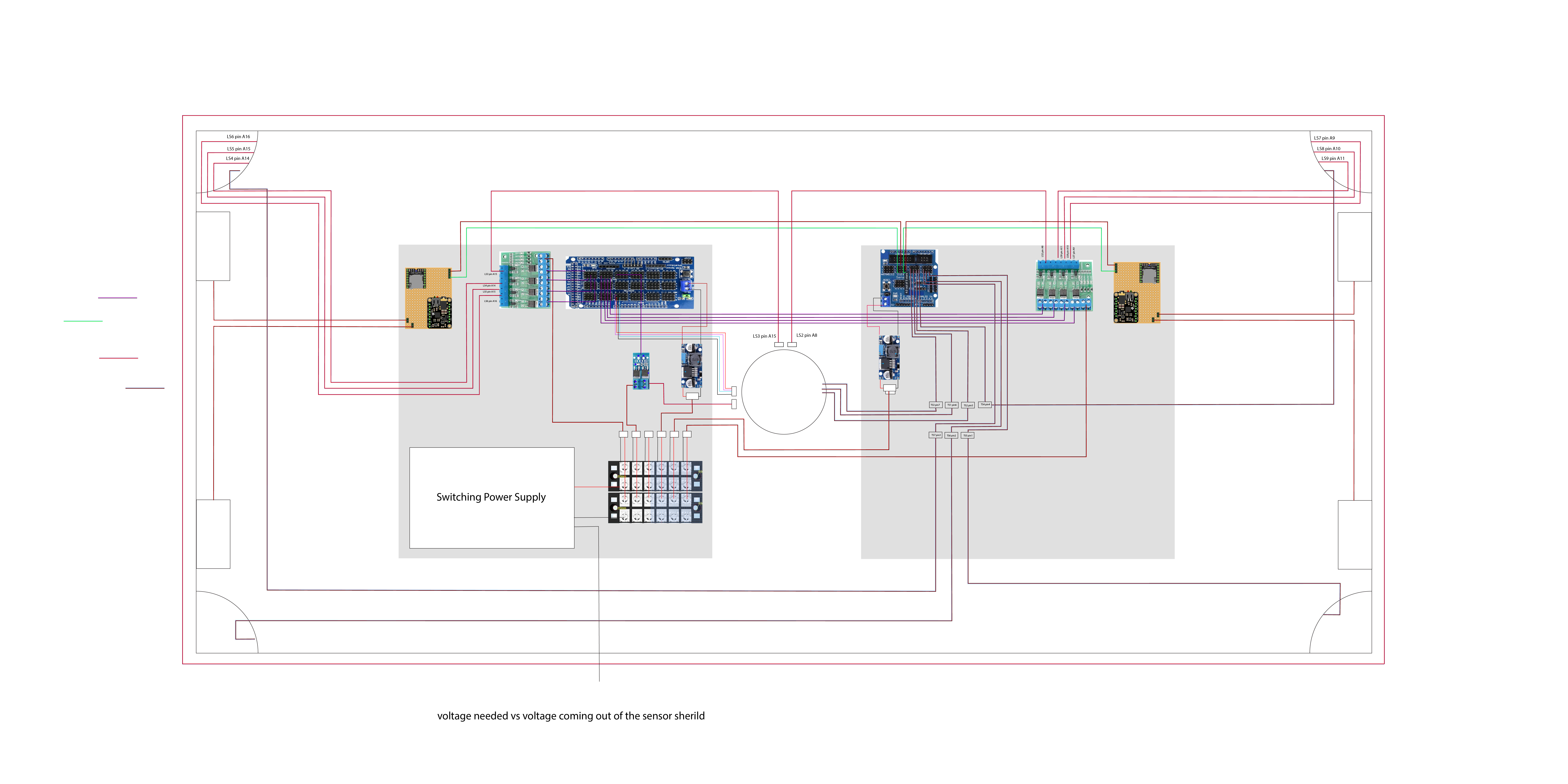
The piece is built in two layers. The front layer is a laser-cut lattice that acts as both a visual surface and a veil for the light and sound coming from behind it. The back layer is where the work actually lives, it houses the speakers, amplifiers, micro SD audio reader, LED lighting, and the sensing hardware that lets the piece respond to a viewer. I worked with and assisted Adam Ashley on the frame, and I fabricated the laser-cut lattice.
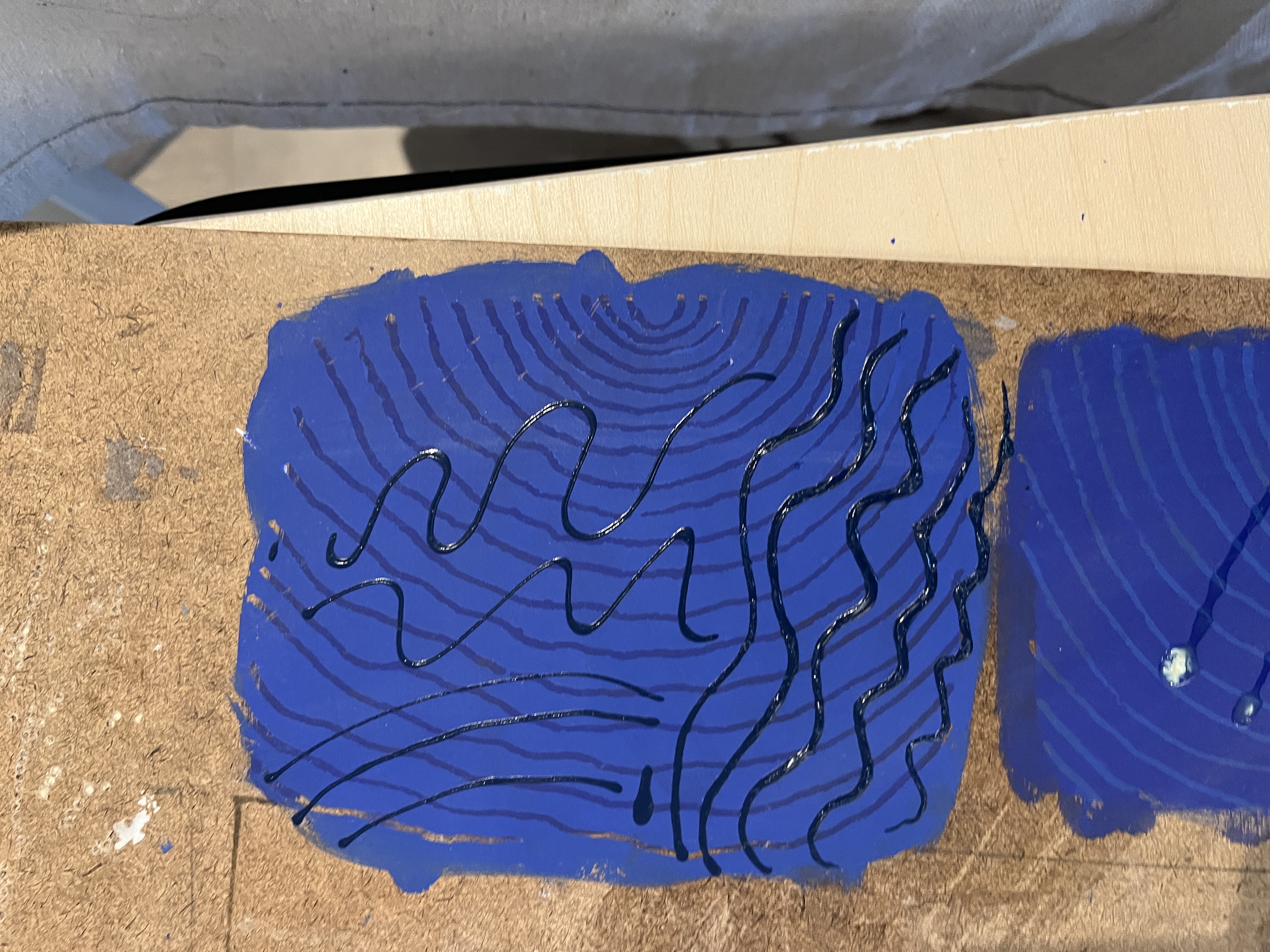
The frame itself was hand-painted in the style of Adire, the Yoruba resist-dyeing tradition, with each line laid down by hand through a small tube in a manner drawn from Batik practice. Painting the frame this way was a deliberate choice, rather than treating the enclosure as a neutral housing for the electronics, the surface carries the cultural language the work is reaching toward. The marks are slow, repetitive, and imperfect in the way hand-laid lines always are, and that slowness felt right for a piece about memory and longing.

Sensing + Light
Touch sensors are embedded in [the lattice / specific points on the front], with their signal lines extended on long wires so the sensing points could sit in the visible layer while the electronics stayed hidden in the back. A warm LED strip, driven through a 4-channel MOSFET board, provides the interior glow, running the light through MOSFETs lets each channel be dimmed and faded independently so the light can breathe rather than flicker on and off.
A presence sensor tracks where people are in relation to the piece, so the work can acknowledge a viewer approaching before they ever reach out to touch it. The warmth of the light and the softness of the response are deliberate, the piece should feel like something that recognizes you, not something that reacts to you.